

What Is Laryngopharyngeal Reflux?
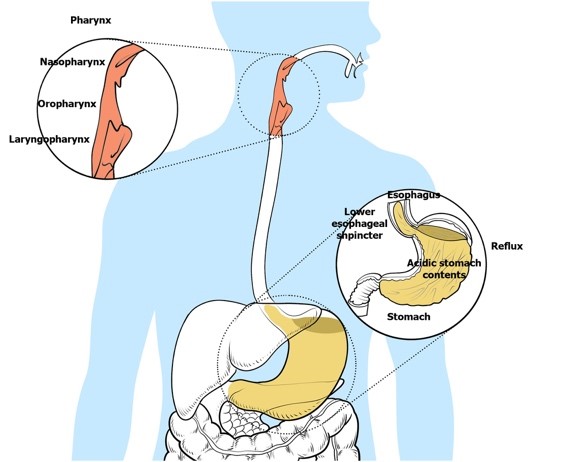
Laryngopharyngeal Reflux (LPR) is the condition in which gastric contents (acid, pepsin, bile) reach the larynx and pharynx, causing mucosal damage. Unlike classic Gastroesophageal Reflux Disease, most patients may have no typical heartburn.
Clinical Findings
- Hoarseness
- Need to clear the throat
- Globus sensation (feeling of something stuck in the throat)
- Chronic cough
- Difficulty swallowing
- Symptoms that worsen in the morning
Since symptoms are generally non-specific, there is a risk of overdiagnosis.
Diagnosis of Laryngopharyngeal Reflux
1- Clinical Scores
- Reflux Symptom Index (RSI)
- Reflux Finding Score (RFS)
Helpful in clinical practice but not sufficient for diagnosis alone.
2- Endoscopic Evaluation
- Findings of posterior laryngitis:
- Arytenoid edema
- Erythema
- Vocal cord edema
However, the specificity of these findings is low.
3- Gold Standard Test
- 24-hour dual-probe pH monitoring or impedance-pH
Particularly recommended in treatment-resistant patients
Treatment (evidence-based)
4- Lifestyle Modifications (First-Line – Strong Recommendation)
- Not eating within 3 hours before bedtime
- Reducing caffeine, alcohol, chocolate, and acidic foods
- Weight control
- Elevating the head of the bed
The strongest and most sustainable effect lies here
1- Medical Treatment
2- a) Proton pump inhibitors (PPI): Generally twice daily, 8–12 weeks
2- b) Alginate therapy
- Forms a reflux barrier
Particularly beneficial in non-acid reflux
3- c) H2 receptor blockers
Less effective, supportive treatment
4- Resistant Cases
- Reassess the diagnosis
- Confirmation with pH/impedance
- Alternative diagnoses:
- Functional throat complaints
- Muscle tension dysphonia
- Allergy / postnasal drip
5- Surgery
- Anti-reflux surgery in selected patients
Not routinely recommended for LPR
- LPR is a diagnosis that can be overused, laryngoscopic findings are non-specific, and PPI treatment is not effective in every patient. A multidisciplinary approach (ENT + gastroenterology) is important
LPR is one of the common causes of voice and throat complaints; however, its diagnosis is difficult, lifestyle modifications are fundamental in treatment, and medical therapy benefits selected patients. Reassessment of the diagnosis in resistant cases is of critical importance.
Instagram: prof.dr.elifaksoy
