
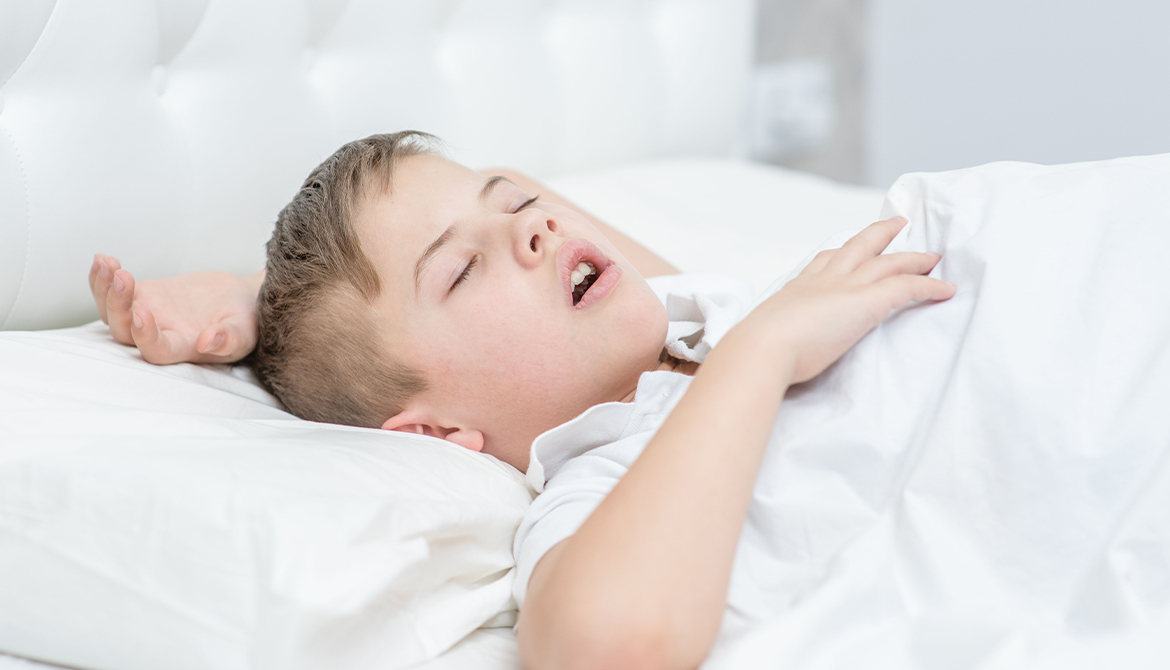
Definition and Epidemiology of Snoring, Sleep Apnea, and Adenoid Hypertrophy in Children
Snoring in children and obstructive sleep apnea (OSA) are spectrum diseases that develop due to upper airway obstruction.
- Simple snoring: increased airway resistance
- Obstructive Sleep Apnea (OSA): recurrent apnea/hypopnea episodes
Prevalence:
- Snoring: 7–10%
- OSA: 1–5%
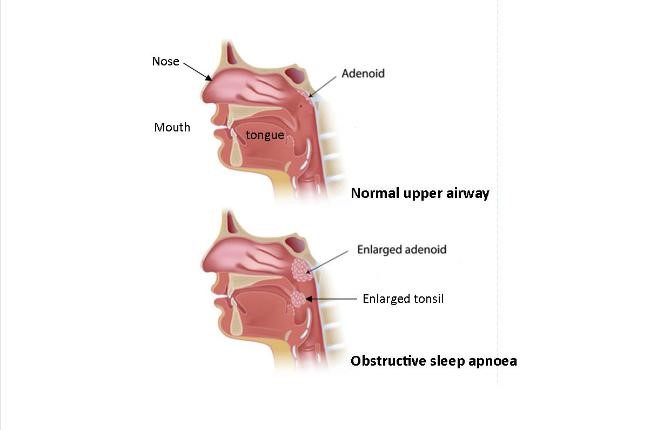
Most common cause: Adenoid hypertrophy ± tonsillar hypertrophy
Clinical Findings
Nighttime symptoms
- Snoring
- Sleeping with mouth open
- Apnea (breathing pauses)
- Restless sleep
- Sweating
Daytime symptoms
- Mouth breathing
- Nasal congestion
- Attention deficit / hyperactivity
- Growth retardation (advanced cases)
Unlike adults, in children behavioral problems are predominant rather than daytime sleepiness
Pathophysiology
- Adenoid and tonsillar hypertrophy → nasopharyngeal obstruction
- Muscle tone decreases during sleep → collapse increases
- Chronic hypoxia → neurocognitive and cardiovascular effects
Diagnosis
1- Clinical Evaluation
- History + physical examination (tonsil/adenoid size)
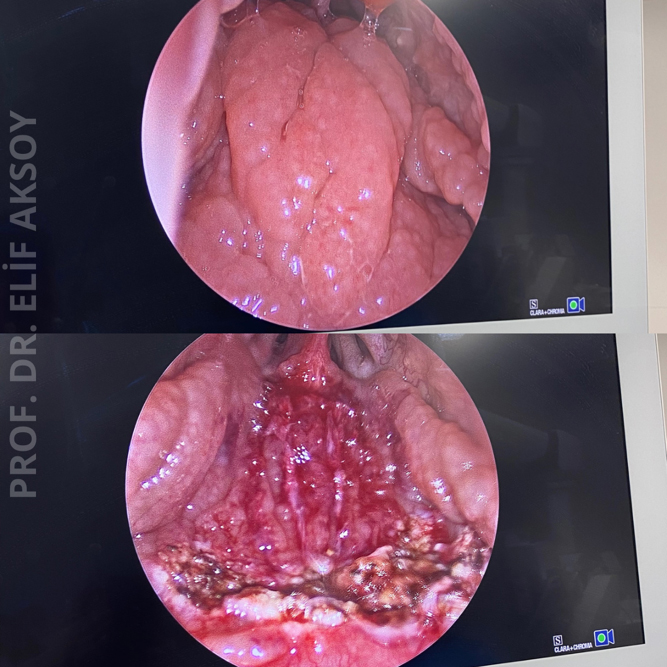
2- Endoscopy
- Nasopharynx evaluation
3- Gold Standard
- Polysomnography (PSG)
Diagnosis and severity are determined by the Apnea-Hypopnea Index (AHI)
Treatment of Snoring in Children
1- Surgical Treatment (First Choice)
- Adenoidectomy ± tonsillectomy/Tonsillotomy
In mild to moderate OSA:
- Significant improvement in symptoms
- Meaningful reduction in AHI
Guidelines (AAP, AAO-HNS):
- Recommended as first-line treatment
2- Medical Treatment (Selected Patients)
- Intranasal steroids
- Leukotriene receptor antagonists (e.g. montelukast)
Particularly for:
- Mild OSA
- Patients not suitable for surgery
3- CPAP
- In cases where surgery has failed or is contraindicated
4- Additional Approaches
- Obesity management
- Allergic rhinitis treatment
Complications (if left untreated)
- Growth retardation
- Learning difficulties
- Behavioral problems
- Pulmonary hypertension (advanced cases)
Clinical Pearls
- Not every child who snores has OSA, however if apnea is reported, further evaluation is mandatory
- Adenoid hypertrophy is the most common cause in children
- Early treatment is critical for neurocognitive development
Snoring and OSA in children are most commonly associated with adenoid and tonsillar hypertrophy. Polysomnography is the gold standard for diagnosis. Adenoidectomy ± tonsillectomy/tonsillotomy is the most effective treatment method, and medical treatment and CPAP alternatives should be considered in appropriate patients.
Instagram: prof.dr.elifaksoy
