
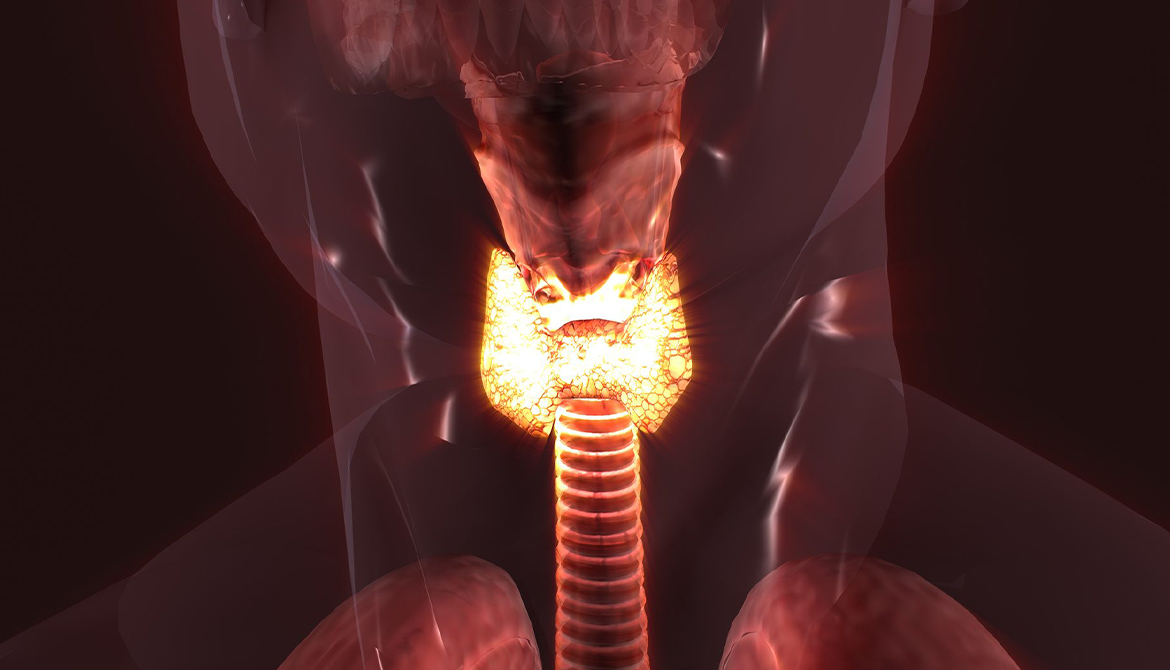
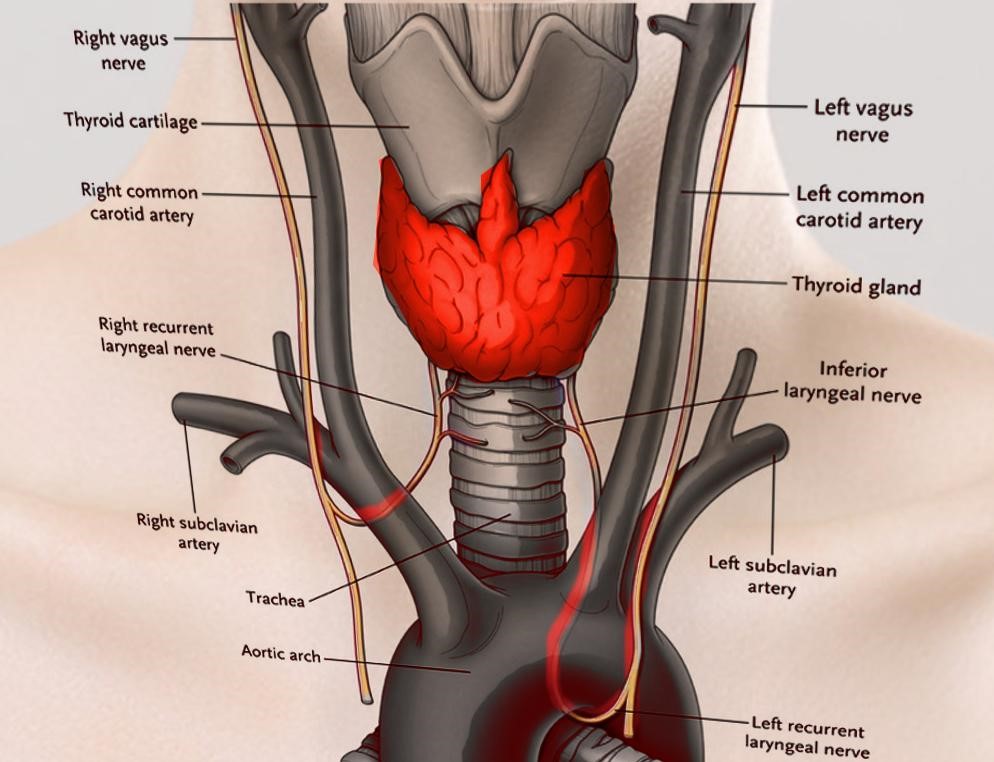
Vocal cord paralysis is a condition characterized by loss of movement in one or both vocal cords. The most common cause is recurrent laryngeal nerve damage. Unilateral cases are more common; bilateral paralysis can be more critical in terms of breathing.
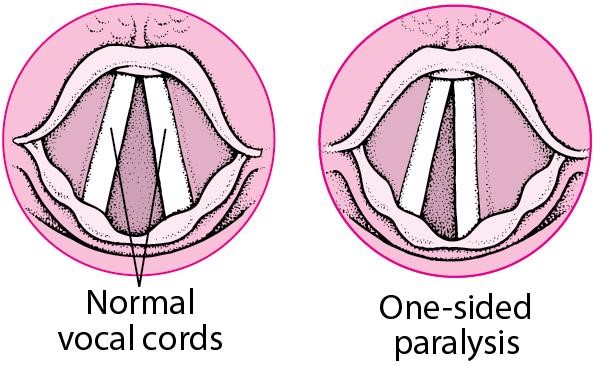
Symptoms
- Hoarseness (most common finding)
- Breathy, weak voice
- Difficulty swallowing (especially with liquids)
- Weak cough
- Aspiration (including silent aspiration)
- In bilateral cases: shortness of breath / stridor
Etiology
- Post-surgical (thyroid, parathyroid, cardiac surgery)
- Viral neuropathy
- Stroke and neurological diseases
- Tumors (lung apex, thyroid, mediastinum)
- Idiopathic (approximately 20–30%)
Diagnosis
1- Endoscopic Evaluation
- Fiberoptic Laryngoscopy
- Vocal cord movements are directly observed
- Stroboscopy → vibration analysis
2- Swallowing Evaluation
- FEES
Aspiration risk and secretion control are assessed
3- Imaging
- Neck + thorax CT / MRI
👉 Tumor or compression along the nerve is investigated - Brain MRI
4- Laryngeal EMG (selected cases)
- Provides information about prognosis and nerve recovery
Treatment
1- Conservative Approach (First-Line)
- Voice therapy (speech therapy)
- Swallowing rehabilitation
- Aspiration precautions
Spontaneous recovery may occur especially within the first 6–12 months
2- Temporary Interventions
- Vocal cord injection
Hyaluronic acid / fat
Goal: to improve glottic closure
Reduces aspiration in the early period, improves voice
3- Permanent Surgical Options
- Medialization thyroplasty (Type 1 thyroplasty)
- Arytenoid adduction
- Reinnervation (selected young patients)
4- Bilateral Paralysis (Special Situation)
- Priority: airway safety
- If necessary:
Laser cordotomy
Tracheotomy
Clinical Approach Algorithm
- Confirm diagnosis (laryngoscopy)
- Investigate etiology (CT/MRI)
- Assess aspiration risk (FEES)
- First stage: voice therapy ± injection
- Plan permanent surgery after 6–12 months
Clinical Pearls
- In newly onset vocal cord paralysis, imaging up to the lung apex is mandatory
- Aspiration can sometimes be silent → only detected with FEES
- Early injection significantly improves quality of life.
Instagram: prof.dr.elifaksoy
